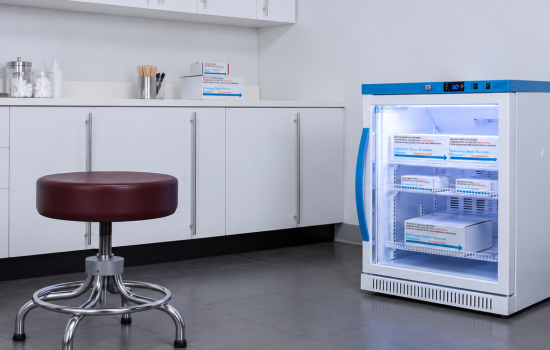
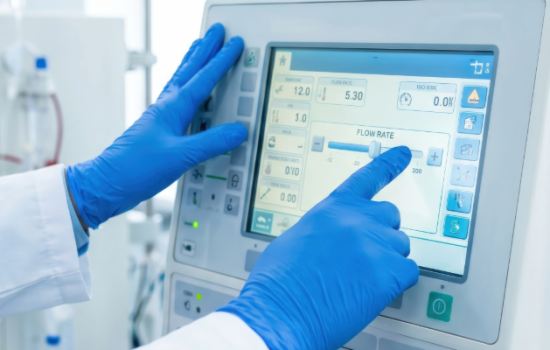
A pharmacy may have two vaccine refrigerators and a freezer. A laboratory might need backup power for cold storage, incubators, and supporting equipment. Does every device need its own battery backup system?
Not necessarily. Medi-Products can size a battery backup system to support multiple refrigerators, freezers, or other compatible devices, including equipment located in different rooms. The right configuration depends on the combined electrical load, required runtime, and how the equipment will connect to the system.
Start with the equipment, not the number of outlets
Two refrigerators can have very different power requirements. Their size, compressor design, operating temperature, and energy consumption all affect system selection. A freezer may also require substantially different backup capacity than a refrigerator.
For that reason, the number of available outlets does not tell you how many appliances a backup system can support. Each connected device must be included in the assessment.
Start with a complete equipment list, including:
- Manufacturer and model number
- Voltage and available amperage or wattage information
- Startup requirements, if provided by the manufacturer
- Quantity and location of each device
- Desired backup runtime
Photos of equipment nameplates can help provide the information needed to begin sizing.
Account for compressor startup
Refrigerators and freezers can briefly draw more power when their compressors start than they use during normal operation. A backup system must handle that startup demand as well as the ongoing load. A system with sufficient battery capacity may still be unsuitable if its output cannot start the connected equipment.
With several appliances sharing a system, the assessment should consider the possibility of overlapping startup demands. Simply adding together average energy consumption does not establish whether the system can support the equipment.
Size battery capacity for all connected equipment.
Output power and battery capacity serve different purposes. Output determines the electrical load a system can support; battery capacity helps determine how long it can support that load.
For example, a clinic seeking 24 hours of backup for three refrigerators and one freezer needs a system assessed for that entire group. A runtime estimate for one refrigerator cannot be applied to four appliances.
Medi-Products evaluates equipment power consumption and desired runtime when sizing a solution. Adding another device later should prompt a review of both available output and expected runtime.
Choose a connection approach that fits the facility
Equipment grouped in one area may be suited to a plug-and-play system, provided the system’s ratings and approved connections support every device. Appliances in separate rooms or on different circuits may be better served by a hardwired system.
Medi-Products’ hardwired systems integrate with building wiring and can support multiple units in multiple locations. Installation requires a licensed electrician, with the circuit arrangement planned around the equipment being protected.
A shared system is not automatically the best choice for every facility. Separate systems may make sense when equipment has different runtime requirements or when the facility wants to avoid having all critical loads depend on one backup unit.
Plan around everything you need to protect
Other devices can be considered alongside refrigeration, provided their electrical requirements and operating needs are included in the assessment. Identify essential loads first and discuss anticipated additions before selecting a system.
Medi-Products can review your equipment list, facility layout, and runtime goals to help determine whether one shared system or several dedicated systems would better fit your application.
Visit mediproducts.net or call 1.800.765.3237 to discuss backup power for your facility.